
Use fiberglass plastering mesh to hang before plastering or after plastering
Dec 03,2021
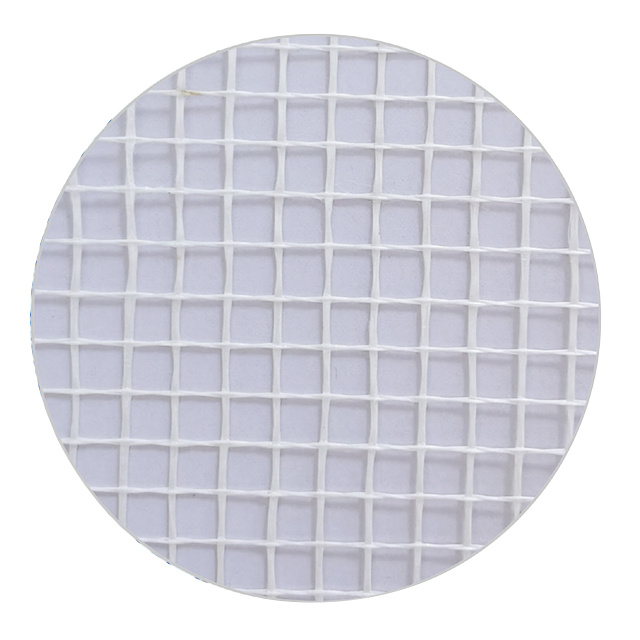
Before plastering with fiberglass plastering mesh, the foundation wall should be fully watered and evenly moistened. Because the drying shrinkage value of the masonry wall is greatly affected by the moisture content, the moisture content is between 10% and 30%. The shrinkage value is small (usually 0.02~0.1mm/m); therefore, it is very important to control the moisture content.
The wall should be properly sprinkled with water the day before masonry, the surface wet depth should be 8-10mm (the water content of the actual construction should not be greater than 20%), and the intersection of the wall column and wall beam should be watered and moist to prevent the foundation wall from being poured. Water impermeability causes the water in the plastering mortar to be quickly absorbed by the foundation wall, causing quality problems.
1. Before wiping, a thin layer of ash should be applied, and the substrate should be wiped tightly. When wiping, compact the mortar to squeeze the mortar into the small gaps, then wipe and fill the ribs in layers, level with a wooden pole, and wipe with wood. Rub hair. Then check whether the bottom gray is flat, whether the yin and yang angles are square and tidy, whether the junction between the pipe and the inner corner and the wall top plate is smooth and straight, and check the verticality and flatness of the wall with a wire board. The plastering surface should be connected smoothly, the floor skirting board or wall skirt, and the back of the pipe should be cleaned up in time to ensure that the end of the life is clear.
2 The plastering mortar should be configured according to the specified mix ratio, and the measurement and inspection should be strictly carried out. For the part with too thick plastering (plastering thickness>35mm), a plastering should be carried out in advance one day before the base layer plastering to prevent one plastering Too thick, causing cracking or hollowing off.
3. When the bottom ash is 60% to 70% dry, start to wipe the face ash (if the bottom ash is too dry when wiping, it should be watered and moistened). The face ash will survive twice, with a thickness of about 2mm. It is best for two people to cooperate at the same time during the operation. One person scrapes the thin ash first, and the other smoothes it off immediately. When the construction is carried out in the order of up and down, the entire wall should not be broken. If there is a reserved construction hole, the entire wall can be thrown off to be wiped.
4. Strict the thickness of each layer of plastering to prevent too thick plastering at one time, resulting in an increase in shrinkage rate, resulting in hollowing and open plastering of the bottom layer. Construction preparation, plastering base treatment, plastering surface layer, hanging fiberglass plastering mesh, plastering surface layer kneading, plastering surface maintenance cracking and other quality issues. The materials used in the plaster mortar should be fully hydrated to prevent it from affecting the adhesion.
5. Hang the fiberglass plastering mesh, and before the initial setting of the surface layer plastering, pave the cut alkali-resistant fiberglass plastering mesh on the surface of the surface layer plastering mortar, and ensure that the glass fiber cloth and the surface layer mortar will not fall off. , Pay attention to the phenomenon of no gaps and unsatisfactory overlap (lap length ≥ 70mm) when paving.
6. The plastering surface layer is kneaded and corrected according to the verticality and flatness required by the standard. At the same time, it is calendered according to the surface requirements of the inner wall plaster. Press the alkali-resistant glass fiber mesh into the plastering surface layer so that the mesh is faintly visible but does not leak the mesh cloth. Then rush to press, and control the heat when pressing. Neither water marks should appear, nor can it be pressed. After pressing, use a brush to dipped in water to clean up the dust contaminated surface.
7. The plastering surface layer is maintained. The sprayer is used for water spraying in the early stage, and the water is sprayed for curing in the later stage. The maintenance records are made, and a special person is sent to supervise and inspect to ensure that the plastered surface is wet. The curing period is not less than 3 days.
8. Carry out partial reinforcement with fiberglass plastering mesh.
Hot Tags:
Contact Us
E-mail:
Phone/WhatsApp:
Address:
Meizhuang Village, Jieguan Town, Wuqiang County, Hengshui City, Hebei Province, China

Our products are: mesh cloth, external wall insulation mesh cloth, glass fiber mesh cloth, building mesh cloth, reinforced mesh cloth, alkali resistant mesh cloth, alkali resistant glass fiber mesh cloth, flue mesh cloth, etc.


CONTACT INFO
Tel: +86-318-3957770
Meizhuang Village, Jieguan Town, Wuqiang County, Hengshui City, Hebei Province